
In mechanical engineering, forces acting on machine components are typically categorized by their direction relative to the component axis. Radial forces act perpendicular to the rotational axis of a shaft or component, while axial forces act parallel to the axis. Understanding the distinction between these force types and their combined effects is essential for designing reliable mechanical systems. The fuerza axial formula provides engineers with a mathematical tool for calculating the linear force component in systems where rotational motion is converted to linear motion, such as in lead screws, ball screws, and bolted joint assemblies. At Junying Metal Manufacturing Co., Limited, we apply these engineering principles throughout our manufacturing process to ensure that every component we produce performs correctly under its intended loading conditions.
Radial force is defined as any force that acts perpendicular to the centerline of a rotating shaft or cylindrical component. In rotating machinery, radial forces typically arise from gear meshing, belt tension, bearing loads, and imbalance conditions. These forces generate bending moments in shafts, create reaction loads at bearing supports, and influence the dynamic behavior of rotating assemblies. The magnitude and direction of radial forces must be carefully analyzed during the design phase to select appropriate bearing types, determine required shaft diameters, and predict fatigue life. Components subject to significant radial forces require precise geometry control and material properties that our manufacturing processes are specifically designed to deliver.
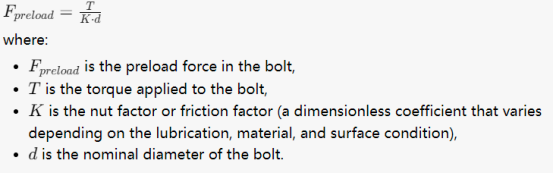
The calculation of axial force from applied torque follows the fundamental equation that relates these two mechanical parameters. In threaded fastener applications, the axial clamping force generated by torquing a bolt depends on the thread geometry, friction coefficients, and lubrication conditions. The general formula expresses axial force as F = T divided by the product of K and D, where the nut factor K accounts for all frictional contributions. This relationship is critical for determining proper torque specifications in assembly operations, ensuring that bolted joints achieve the required preload without overstressing the fastener material. Our engineering team routinely applies these calculations when developing manufacturing processes for threaded components and when advising clients on assembly specifications.
Our manufacturing expertise directly supports the production of components that must manage both radial and axial forces in service. Typical parts we produce include transmission shafts that transmit torque while supporting gear loads, hydraulic piston rods that transfer axial force while subjected to radial side loads, and precision fasteners that must maintain consistent clamp force under dynamic operating conditions. Each of these applications requires careful attention to material selection, dimensional accuracy, surface finish, and mechanical property verification. Our CNC turning and grinding operations achieve the dimensional precision necessary for proper force distribution, while our heat treatment services ensure the material hardness and strength needed for long-term fatigue resistance.
We invite engineering professionals and procurement specialists to contact our team when they require components that must perform under specific force conditions. Our process begins with a thorough review of the engineering requirements, followed by material selection guidance, manufacturing process planning, and comprehensive quality assurance. We provide detailed inspection documentation including dimensional reports, material certifications, and mechanical test results with every shipment. This commitment to technical excellence and quality transparency has established Junying Metal as a trusted manufacturing partner for companies throughout North America, Europe, and Asia who demand the highest standards in precision machined components for force-critical applications.
Contact Junying Metal Manufacturing Co., Limited
Address: Room 101, No. 1 Xixing Street, Shatou, Chang’an Town, Dongguan City, Guangdong Province, China
Tel: +86 769 8289 0830 Email: [email protected]
Phone: +86 18926517996 Skype: Junying
Website: https://www.cnclathing.com/